
Authored by Jaydatta Patwe, Innovation & Emerging Technologies, Körber Stellium
Copilots, document automation and knowledge retrieval are helping supply chain teams act faster.
Generative AI is helping supply chain teams find knowledge faster, cut manual work and make better decisions.
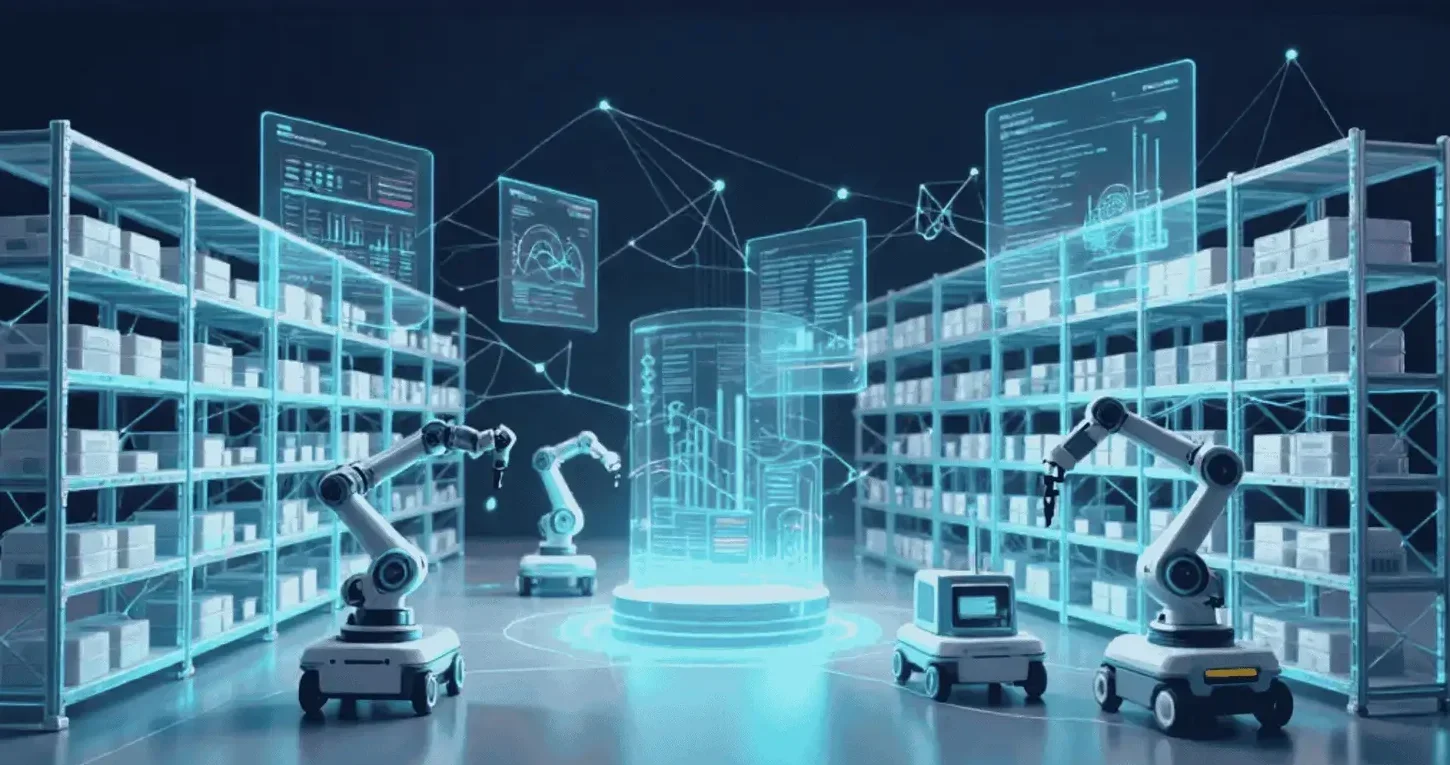
Supply chain teams are under constant pressure to make faster, better-informed decisions, even as the volume of data, documents and supplier communications keeps growing. Generative AI supply chain applications are starting to change how planners, procurement teams and operations managers work, by giving them faster access to knowledge and clearer support for everyday decisions. Rather than replacing expertise, these tools help people find the right information at the right moment, and that shift is quietly reshaping how supply chains run.
The interest is not theoretical. Across procurement, planning and logistics organizations, teams are moving from isolated experiments to production use cases, and the ones seeing real results share a common thread: they are applying generative AI to specific, well-understood knowledge problems rather than treating it as a general-purpose upgrade.
Where Generative AI Supply Chain Applications Deliver Value
GENAI Logistics in Action: A Retail Distribution Example
How to Move Generative AI Supply Chain Applications From Pilot to Practice
Business Value of GenAI in Supply Chain Operations
Start with One High-Impact Generative AI Supply Chain Use Case
The Knowledge Bottleneck in Modern Supply Chains
Most supply chain organizations do not have a data problem so much as a data access problem. Critical information sits in ERP systems, warehouse management systems, transport platforms, supplier portals, spreadsheets and years of email threads. A single sourcing decision might depend on a contract clause buried in a PDF, a delivery exception logged in a ticketing tool and a conversation that only one planner remembers.
This fragmentation slows teams down in three specific ways. New employees take longer to become productive because so much knowledge lives in people’s heads rather than in searchable systems. Experienced staff spend hours each week hunting for documents instead of analyzing them. Decisions that should take minutes stretch into days while someone tracks down the right file or the right person.
The cost of this bottleneck compounds during disruption. When a supplier misses a shipment or a transport lane is blocked, the teams that respond fastest are the ones who can immediately see the relevant contract terms, the alternative supplier list and the historical precedent for how similar exceptions were handled. Too often, that context exists somewhere in the organization, but nobody can find it quickly enough to act on it.
This is the gap that generative AI is now starting to close, not by adding another system, but by making the knowledge already inside existing systems easier to reach and easier to use.
Where Generative AI Supply Chain Applications Deliver Value
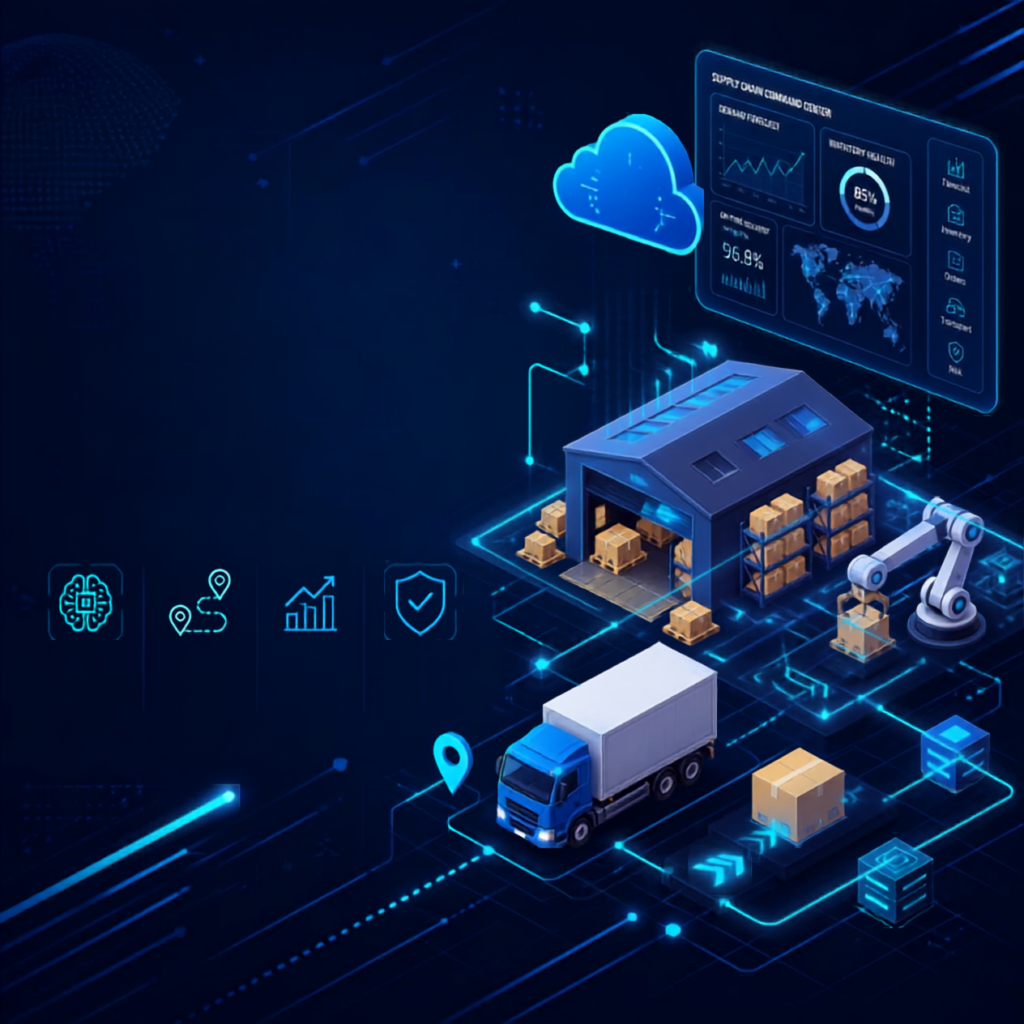
Across procurement, planning and logistics, five use cases show the clearest early results.
Copilots for planners and buyers.
Conversational assistants embedded in planning and procurement tools let staff ask questions in plain language, such as which suppliers are at risk of missing a delivery window, and receive an answer drawn directly from live operational data. Instead of running several reports and cross-referencing spreadsheets, a planner can get a synthesized answer in seconds, along with the underlying data to verify it.
Knowledge retrieval across scattered systems.
Instead of searching multiple platforms separately, teams can query a single interface that pulls relevant answers from contracts, standard operating procedures, past incident reports, and internal wikis. A procurement manager preparing for a supplier negotiation, for example, can ask for a summary of past pricing disputes and service-level performance without manually reviewing years of correspondence.
Document generation.
Generative AI can draft first versions of routine but time-consuming documents, including requests for quotation, supplier scorecards, exception reports and shipment summaries, giving staff a strong starting point rather than a blank page. This does not remove human review, but it removes the blank-page problem that slows so much documentation work down.
Supplier communications.
Drafting and triaging emails, order confirmations, and clarification requests becomes faster, with the technology flagging unusual terms or missing information before a message goes out. For teams managing hundreds of supplier relationships, this consistency also helps standardize tone and terms across regions.
Enterprise governance.
Applied to policy documents, audit trails, and compliance checklists, generative AI helps teams verify that processes are being followed consistently across regions and business units, and it can quickly surface where documentation is incomplete before an audit rather than during one.
GENAI Logistics in Action: A Retail Distribution Example
Consider a mid-sized retail distribution operation managing inbound shipments from dozens of suppliers across multiple regions. When a shipment is delayed, a planner traditionally has to check the transport management system for status, search email for the original purchase order terms, review the supplier’s service-level history, and then draft a message to the supplier and internal stakeholders explaining the impact and next steps. Depending on how familiar the planner is with that specific supplier relationship, this process can take anywhere from twenty minutes to several hours.
With a generative AI copilot connected to the relevant systems, the same planner can ask a single question about the delayed shipment and receive a consolidated view: the current status, the contractual delivery window, the supplier’s recent performance trend, and a suggested next step based on how similar exceptions were resolved previously. The copilot can also draft the supplier communication and the internal exception report, which the planner reviews, edits if needed, and sends.
The time saved on any single exception may be modest, but retail distribution networks handle exceptions constantly. Multiplied across a planning team handling dozens of these situations each week, the cumulative effect on responsiveness and service levels becomes significant, and it frees experienced planners to spend more time on supplier strategy rather than administrative follow-up.
How to Move Generative AI Supply Chain Applications From Pilot to Practice
As AI adoption matures, organizations are also exploring agentic AI in supply chain to move from decision support toward governed operational action. Organizations that have moved beyond early experiments tend to share a few habits.
- Start with one well-defined use case.
- The most successful rollouts begin with a single, clearly scoped problem, such as speeding up supplier onboarding documentation or exception communication, rather than an open-ended ambition to add AI everywhere at once. A narrow starting point makes it easier to measure results and build internal confidence before expanding.
- Build on clean, connected data.
- Generative AI is only as useful as the information it can access. Teams that invest early in connecting and cleaning their underlying data get noticeably better output than those that layer AI on top of fragmented systems. This groundwork often takes longer than the AI implementation itself, but it determines how much value the technology can ultimately deliver.
- Keep people in the loop.
- The strongest implementations position generative AI as a drafting and research assistant, with a person reviewing and approving anything that goes to a supplier or into a formal record. This keeps accountability clear, protects against errors, and builds trust in the technology over time as staff see it perform reliably on familiar tasks.
- Plan for change management, not just technology.
- Rolling out a new copilot or search tool is as much a change management exercise as a technical one. Training, clear guidelines on when to rely on AI output, and easy ways to give feedback all influence how quickly teams actually adopt the new way of working. Teams that skip this step often see low adoption even when the underlying technology works well.
- Measure early and often.
- Defining success metrics before launch, whether that is time saved per task, faster response times, or reduced escalations, makes it possible to demonstrate value quickly and make the case for scaling to additional use cases.
Business Value of GenAI in Supply Chain Operations
The value of generative AI in supply chain operations shows up in a handful of measurable areas. Decision cycles shorten when planners no longer have to chase down information manually across multiple systems. Time spent searching for documents and precedents drops significantly, freeing hours each week for higher-value analysis. Supplier response times improve when routine communications are drafted faster and more consistently, which also tends to improve the overall quality and clarity of external correspondence.
Compliance and audit readiness strengthen when governance checks are easier to run and easier to document, reducing the scramble that often precedes an audit. Experienced staff are freed up to focus on judgment calls, negotiation strategy and relationship building rather than repetitive administrative work, which also tends to improve retention among skilled planners and buyers who did not join the profession to spend their days searching for files.
None of these gains require replacing existing systems. In most cases, generative AI works alongside the ERP, warehouse management and transport management platforms already in place, acting as a layer that makes their data easier to find and easier to act on. This is one reason adoption has moved faster in supply chain functions than in areas that require larger system overhauls.
Key Takeaways: Core Lessons for Adoption and Value
- Generative AI supply chain applications work best when they solve a specific, well-scoped knowledge or documentation problem rather than serving as a general-purpose initiative.
- Copilots, knowledge retrieval and document generation are the use cases delivering the clearest early value across procurement, planning and logistics teams.
- Clean, connected data is the foundation that determines how useful these tools become, and it is often the real bottleneck to scaling.
- Keeping a person in the loop protects accuracy and builds trust during adoption, particularly for anything that reaches a supplier or becomes part of a formal record.
- The business case shows up in faster decisions, less manual search time and stronger governance, not in replacing the systems teams already rely on.
Start with One High-Impact Generative AI Supply Chain Use Case
For supply chain leaders evaluating generative AI, the practical next step is not a large transformation program. It is identifying one recurring decision or document that consumes disproportionate time today, and testing whether a focused generative AI application can close that gap. Teams that start this way build the internal evidence and the confidence needed to scale further into adjacent use cases across the organization.
Explore AI-Powered Supply Chain Innovation
Körber Stellium helps organizations move from focused generative AI use cases to practical, scalable outcomes through its AI-powered supply chain innovation capabilities. Our approach brings together enterprise AI, advanced analytics, automation, and purpose-built product add-ons to address specific supply chain challenges.
For teams focused on knowledge retrieval, operational questions and faster decision support, the ChainBrain AI-powered supply chain assistant provides supply chain-specific intelligence, retrieval-grounded answers and integration with trusted enterprise systems, helping teams make faster, more informed decisions, while 4kast.ai AI-powered demand forecasting supports planning teams with improved forecast accuracy, reduced manual effort and scalable, AI-driven demand planning.
To discuss how generative AI can be applied to your supply chain's specific decision points, get in touch with the team to explore the right starting point for your organization.